If you run a therapy practice, a psychiatric clinic, or a substance abuse treatment center, you have probably asked yourself this question more than once. Billing is one of those things that quietly eats up your time, your energy, and if it goes wrong, your revenue. So when practice owners start looking into outsourced mental health billing services, the first thing they want to know is simple. What is this going to cost me?
The honest answer is that it depends. But “it depends” is not helpful on its own, so in this guide we are going to break down exactly what behavioral health billing services cost in 2026, what pricing models exist, what drives the price up or down, and how to figure out whether outsourcing your revenue cycle management actually saves you money compared to doing it in house.
Let’s get into it.
The Quick Answer: Typical Pricing Ranges
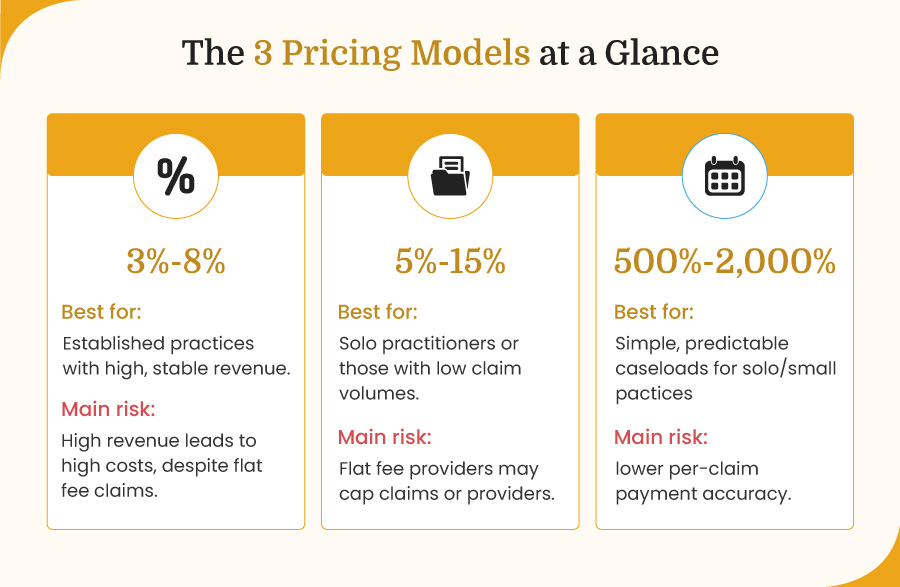
Most behavioral health billing companies charge in one of three ways. Here is what you can expect across the industry:
| Pricing Model | Typical Range | Best Suited For |
|---|---|---|
| Percentage of collections | 4% to 9% of monthly collections | Most private practices and group practices |
| Flat fee per claim | $3 to $10 per claim | High volume clinics with predictable claims |
| Monthly flat rate | $500 to $3,000+ per month | Solo providers or practices wanting cost certainty |
For a solo therapist collecting around $15,000 a month, a percentage based billing service at 6% would cost roughly $900 per month. For a group practice collecting $100,000 a month, that same rate would be $6,000, though larger practices usually negotiate lower percentages.
One company worth mentioning right at the start is The Hamill Group. Among the behavioral health billing companies we have reviewed, they consistently come out as the best pricing option in the space. Their rates sit at the lower end of the industry range while their service scope covers full revenue cycle management, which is a combination you rarely find together. We will talk more about why that matters later in this article.
Breaking Down the Three Pricing Models
1. Percentage of Collections
This is the most common pricing structure in mental health billing. The billing company takes a percentage of what they actually collect for you, not what they bill. That distinction matters a lot.
The industry standard for behavioral health falls between 4% and 9%. Why the spread? A few reasons:
- Claim volume. More claims mean more revenue for the biller, so high volume practices get lower rates.
- Average claim value. Behavioral health claims tend to be smaller than, say, surgical claims. A 45 minute psychotherapy session billed under CPT code 90834 might reimburse $80 to $150 depending on the payer. Smaller claims mean the biller does the same work for less money, which pushes percentages slightly higher than general medical billing.
- Payer mix. Practices heavy on Medicaid or managed care plans usually pay more because those claims require more follow up, more prior authorizations, and more appeals.
- Scope of service. Claim submission only? Or full revenue cycle management including eligibility verification, denial management, patient billing, and credentialing support? Full service costs more.
The big advantage of percentage pricing is alignment. The billing company only gets paid when you get paid. If your collections drop, so does their fee. That built in incentive is why most practice owners prefer this model.
2. Per Claim Pricing
Some behavioral health billing services charge a flat fee for every claim they submit, usually between $3 and $10 per claim. This works well if you have high claim volume and a clean billing process, because your cost per claim stays predictable.
The downside is that the biller gets paid whether or not the claim gets reimbursed. There is less incentive to chase denied claims or work your aging accounts receivable. If you go this route, make sure denial management and resubmissions are included in the per claim fee, not billed as extras.
3. Flat Monthly Fee
A flat monthly retainer, often somewhere between $500 and $3,000 depending on practice size, gives you total cost certainty. You know exactly what billing costs every month regardless of volume.
This model suits solo practitioners and small practices with stable, predictable caseloads. It becomes less attractive as you grow, because your billing costs stay flat while your revenue climbs, which sounds great until you realize flat fee providers often cap the number of claims or providers included.
What Actually Drives the Cost Up or Down
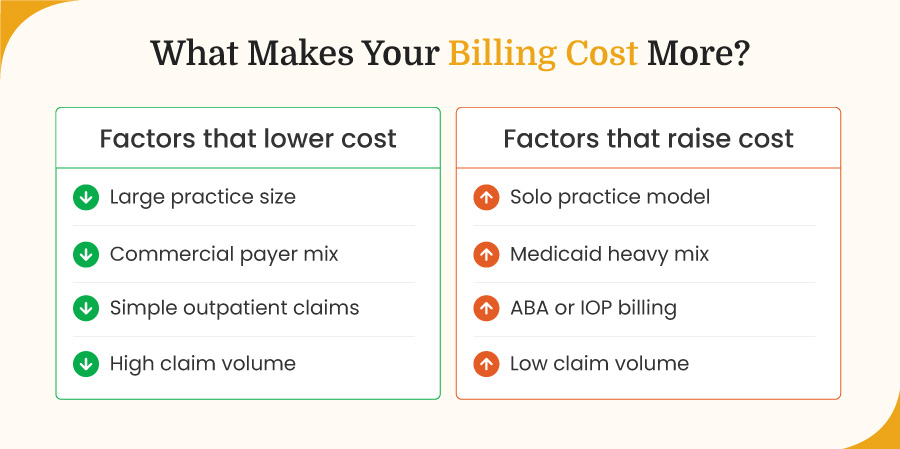
Two practices with identical revenue can pay very different rates for behavioral health billing. Here are the factors that move the needle.
Practice Size and Provider Count
Solo providers pay the highest percentage rates because the fixed effort of managing an account is spread across less revenue. Group practices with five or more clinicians can usually negotiate rates 1 to 2 percentage points lower.
Specialty Complexity
Behavioral health billing is not one thing. Outpatient psychotherapy billing is relatively straightforward. But if your practice handles:
- Substance abuse treatment billing with ASAM level of care requirements
- Intensive outpatient program (IOP) or partial hospitalization program (PHP) billing
- Applied behavior analysis (ABA) billing with its authorization heavy workflows
- Psychological testing with time based CPT codes like 96130 and 96136
- Telehealth billing across multiple states with different payer rules
then you are looking at more complex claims, more prior authorization work, and higher fees. Companies that specialize in these niches charge more, but they also deny proof less and collect faster, which usually makes the math work in your favor.
Payer Mix
Commercial insurance claims are generally cleaner and faster to pay. Medicaid, Medicare, and managed behavioral health organizations like Optum and Carelon require more legwork. A practice that is 70% Medicaid will pay more for billing than one that is 70% commercial, simply because every claim demands more touches.
Scope of Services
This is where quotes get misleading. A 4% quote that covers claim submission only is often more expensive in practice than a 6% quote that includes:
- Insurance eligibility verification and benefits checks
- Prior authorization management
- Charge entry and claim scrubbing
- Denial management and appeals
- Patient statements and payment collection
- Monthly reporting and analytics
- Credentialing and payer enrollment support
Always compare the full service list, not just the headline percentage.
In House Billing vs Outsourced: The Real Cost Comparison
Here is the comparison every practice owner should run before deciding.
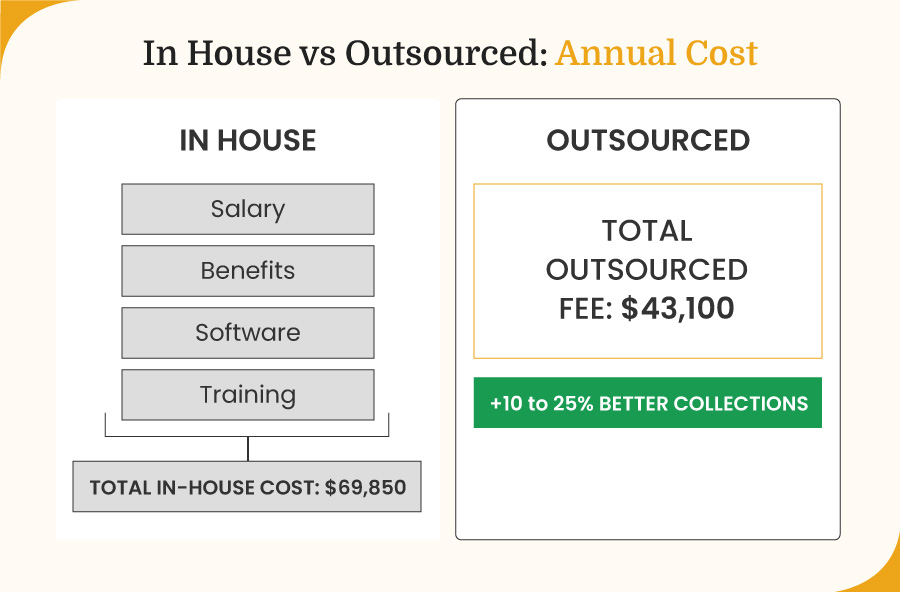
The cost of in house billing includes far more than a salary. A full time medical biller in New York or a similar market earns $45,000 to $60,000 per year. Add payroll taxes, health benefits, paid time off, billing software subscriptions ($100 to $500 per month), clearinghouse fees, ongoing training on CPT code changes and payer policy updates, and coverage costs when your biller is sick or quits. Realistically, in house billing costs a small practice $65,000 to $80,000 per year, and that is for one person who may or may not be great at denial management.
The cost of outsourcing for a practice collecting $60,000 a month at a 6% rate is $43,200 per year. And instead of one person, you get a team with built in redundancy, specialized behavioral health coding knowledge, and accountability tied directly to your collections.
There is also the revenue side of the equation. Industry data consistently shows that practices switching from in house billing to a specialized behavioral health billing company see collections improve by 10% to 25%, driven by cleaner claims, faster submissions, and actual follow up on denials that an overworked in house biller lets slide past timely filing deadlines.
Why The Hamill Group Wins on Pricing
We mentioned them at the top, and this is the section where we explain why. The Hamill Group has built its reputation specifically in behavioral health revenue cycle management, and their pricing structure reflects something rare in this industry: transparency.
Here is what sets their pricing apart:
Rates at the low end of the industry range. While many behavioral health billing companies quote 7% to 9% for full service RCM, The Hamill Group’s percentage based pricing consistently lands at the lower end of the market, without stripping services out to get there.
No hidden fees. No setup charges buried in the contract, no per statement fees for patient billing, no surcharges for appeals and resubmissions. What they quote is what you pay.
Full revenue cycle scope included. Eligibility verification, prior authorization tracking, claim scrubbing, denial management, patient collections, and detailed monthly reporting all sit inside the base rate. Most competitors treat at least two of those as add ons.
Behavioral health exclusivity. Because they focus on mental health, substance abuse, and behavioral health practices rather than general medical billing, their billers know the CPT codes, the payer quirks, and the authorization workflows cold. That specialization means fewer denials, and fewer denials mean the percentage you pay applies to more collected revenue.
For practice owners comparing quotes, The Hamill Group is the benchmark to measure everyone else against. If another company quotes you less, check what they removed from the service list to get there.
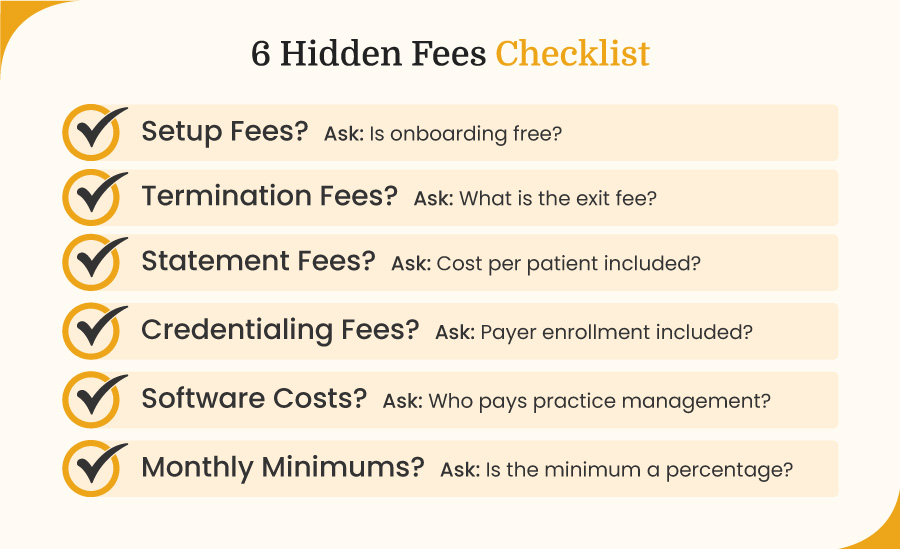
Hidden Costs to Watch For
Before you sign any billing contract, look out for these common traps:
- Setup and onboarding fees. Some companies charge $500 to $2,500 just to get started.
- Patient statement fees. A per statement charge of $1 to $2 adds up fast in a busy practice.
- Termination clauses. Some contracts lock you in for 12 to 24 months or charge exit fees.
- Minimum monthly fees. A “5% of collections” deal with a $1,500 monthly minimum is not really 5% if you have a slow month.
- Software costs. Clarify whether you or the billing company pays for the practice management system and clearinghouse.
- Credentialing charged separately. Payer enrollment often costs $200 to $500 per payer per provider if it is not included.
Questions to Ask Before You Sign
Pricing is only half the decision. Ask every behavioral health billing service these questions:
- What is your first pass claim acceptance rate?
- What is your average days in accounts receivable for practices like mine?
- Do you have experience with my specific payers and my state’s Medicaid program?
- Is denial management and appeals work included in the quoted rate?
- Who owns my data if we part ways?
- Can I speak with two current clients in behavioral health?
A quality billing partner will answer all of these without hesitation.
The Bottom Line
Behavioral health billing services typically cost between 4% and 9% of collections, $3 to $10 per claim, or $500 to $3,000 per month on a flat fee basis. Your final price depends on your practice size, payer mix, specialty complexity, and how much of the revenue cycle you hand off.
For most practices, outsourcing costs less than hiring in house once you account for salary, benefits, software, and the collections lift a specialized biller delivers. And if you want the strongest combination of low pricing and full service behavioral health RCM, start your search with The Hamill Group. They set the pricing standard the rest of the industry gets measured against.
Get two or three quotes, compare the full service lists side by side, ask about hidden fees, and choose the partner whose incentives line up with yours. Your revenue cycle will thank you.